
 By and
Quick answer: MADA grew a women's apparel brand from $15,000 to $48,259 in monthly TikTok Shop GMV in 60 days at 9.59x return on ad spend — a shop that was already selling, scaled by widening creator coverage rather than by rebuilding the offer.
Where this brand started
Unlike most cases on this page, this shop was already working. $15,000 a month means the listings converted, the product had proven itself, and the account was healthy. The question was not whether TikTok Shop suited the brand — it was why growth had levelled off.
What the numbers were
| Starting GMV | $15,000/month |
|---|---|
| GMV at 60 days | $48,259/month |
| Return on ad spend | 9.59x |
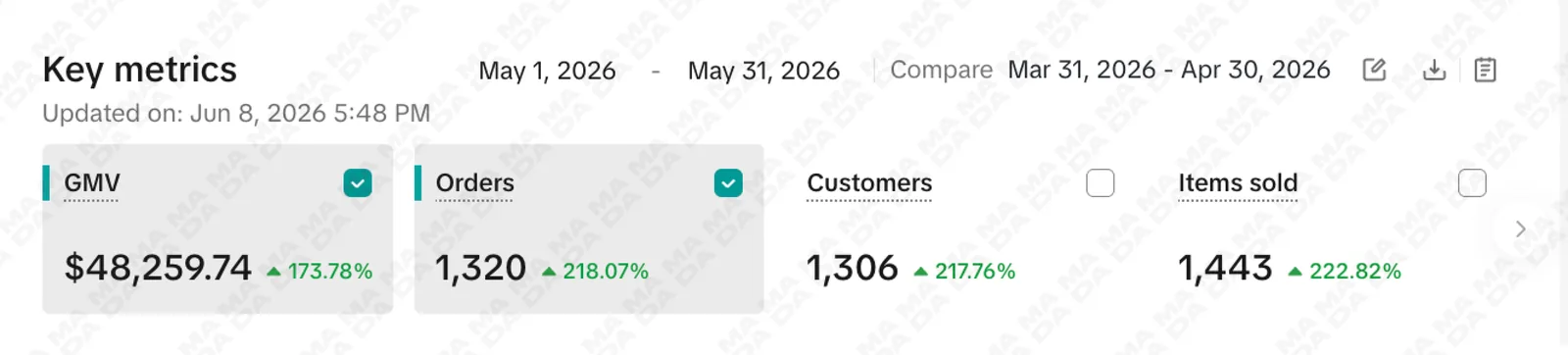
End-of-period monthly GMV from TikTok Shop Seller Center for this engagement, recorded at handover. One shop in one category, reported as run — not an average across accounts.
Why an already-selling shop plateaus
A shop doing steady mid-five-figure months has usually saturated the creator pool it can reach on its own. The same affiliates post, the same audiences see it, and adding budget against that fixed base produces diminishing returns rather than growth.
Tripling in 60 days at 9.59x came from widening the creator base rather than from spending harder against the existing one. The high return is a consequence of that order: new creators brought new audiences, and paid media placed behind their best-performing videos reached people the shop had not already exhausted.
How MADA approaches apparel
Apparel converts on fit and movement, which makes creator diversity a commercial variable rather than an aesthetic one. Recruitment deliberately spans body types and styling contexts, because a shopper buys when someone recognisably like them wears the item.
Returns matter more here than in any other category. Sizing guidance in the listing and in creator briefs is what keeps the return rate from eroding the margin that funds the commission, and it is the detail most apparel sellers underinvest in.
How this category behaves on TikTok Shop
Fashion is TikTok Shop's second-largest US category at about 14.8% of GMV, behind beauty and skincare at 22.5% (Dashboardly TikTok Shop category statistics (2026)). Womenswear is the largest part of it.
Scale cuts both ways. A large category means a deep creator pool — there is always another cohort of relevant affiliates to recruit, which is exactly what moved this account off its plateau. It also means the shopper has already seen a great many similar products, so each additional video works less hard than it would in a smaller category, and sustained content volume matters more here than almost anywhere else on the platform.
What we would tell another apparel seller
- A plateau usually means creator saturation, not a broken offer. Widen the pool before rewriting the listing.
- Creator diversity is a conversion mechanism in apparel. Shoppers buy from someone whose fit resembles theirs.
- Track contribution margin after returns, not GMV. Apparel's return rate can quietly consume the commission budget.
- 9.59x came from spending behind proven videos. The same budget against untested creative would not have produced it.
Frequently asked questions
The most common cause for an already-selling shop is creator saturation: the same affiliates reaching the same audiences, with added budget producing diminishing returns. This brand tripled from $15,000 to $48,259 a month in 60 days by widening the creator base rather than increasing spend against the existing one.
It depends on margin, not on a universal benchmark. This engagement held 9.59x, which is high, and it came from placing budget behind creator videos already converting organically. A shop buying reach for untested creative should expect materially lower returns.
Talk to an official TikTok Shop partner
Tell us your category and where you are today. We will tell you straight what TikTok Shop can do for you — including when the answer is that it is not worth it yet.
Book a call → Message on WhatsApp
or email hello@wearemada.com