
 By and
Quick answer: MADA reversed a declining supplement store's TikTok Shop performance, growing monthly GMV from $6,000 to $18,601 in 60 days at 3.93x return on ad spend with 580,000 impressions. The shop was losing ground before the engagement started.
Where this brand started
A supplement store that had been selling and was going backwards. A decline is a different problem from a flat launch: something that used to work has stopped, and the first job is establishing what.
What the numbers were
| Starting GMV | $6,000/month and declining |
|---|---|
| GMV at 60 days | $18,601/month |
| Return on ad spend | 3.93x |
| Impressions | 580,000 |
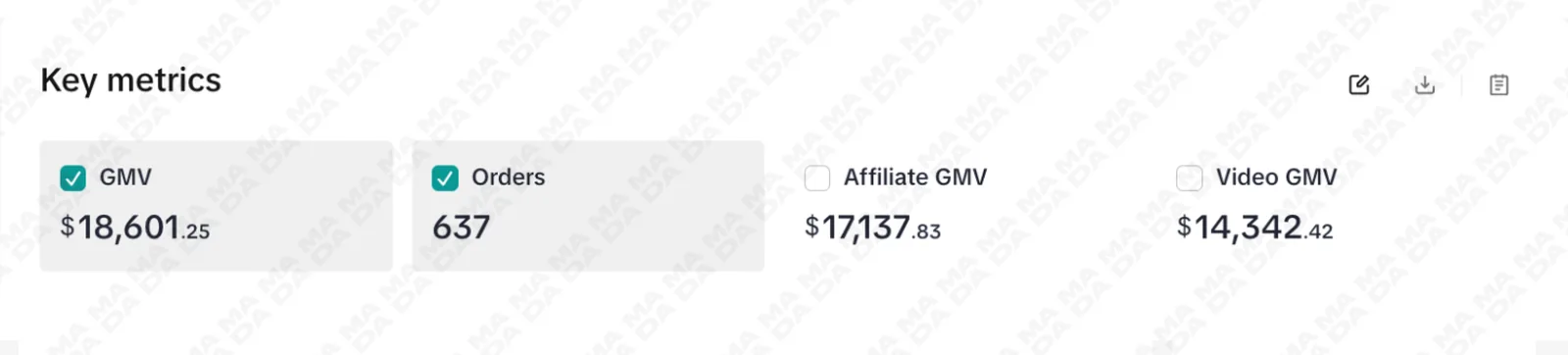
End-of-period monthly GMV from TikTok Shop Seller Center for this engagement, recorded at handover. One shop in one category, reported as run — not an average across accounts.
Diagnosis before spend
A declining shop has four common causes and they need opposite responses. Account health constraints cap reach invisibly. Creator attrition dries up the content supply. Listing conversion decays as competitors improve. Margin compression makes the same volume unprofitable.
Spending into a decline without identifying which one is at work is the most expensive mistake available, because three of the four get worse with added budget. The 3.93x that followed came from fixing the cause first and only then scaling.
How MADA approaches supplements
Supplements are a restricted category, so account health and claim compliance sit underneath everything else. Category qualification and ingredient documentation have to be current, and every creator gets structure-function language with an explicit do-not-say list — a claim that a supplement treats a condition is a violation regardless of who made it.
Commission is set against landed margin, which in supplements is usually tighter than the category's advertised rates suggest. Creator recruitment favours people already selling supplements to an audience that buys them, rather than large general-wellness accounts.
How this category behaves on TikTok Shop
Health and wellness is the fastest-growing major category on TikTok Shop in the US, at roughly 55% year on year on about 11.2% of GMV (Dashboardly TikTok Shop category statistics (2026)).
That rate matters when reading a decline. In a category expanding at 55%, a shop holding flat is losing share and a shop falling is losing it fast — the category's own growth disguises how much ground is going. It is also why "the market must be saturated" is usually the wrong diagnosis for a declining supplement store. The market is growing; the problem is almost always inside the account.
What we would tell another supplement seller
- Diagnose before spending. Three of the four common causes of decline get worse with more budget.
- Check Shop Performance Score first. An invisible reach cap looks exactly like market saturation.
- Creator attrition is normal and continuous. Recruitment is a standing process, not a launch task.
- Tripling from $6,000 is recovery plus growth. Do not read it as a rate that continues indefinitely.
Frequently asked questions
Usually one of four things: an account health constraint capping reach, creator attrition reducing content supply, listing conversion decaying as competitors improve, or margin compression making the same volume unprofitable. They need opposite responses, and adding ad spend makes three of them worse — so diagnosis has to come first.
Yes, if the cause is identified before money is spent against it. This supplement store went from $6,000 a month and falling to $18,601 in 60 days at 3.93x return, by fixing the underlying cause first and scaling afterwards.
Talk to an official TikTok Shop partner
Tell us your category and where you are today. We will tell you straight what TikTok Shop can do for you — including when the answer is that it is not worth it yet.
Book a call → Message on WhatsApp
or email hello@wearemada.com